


If you’ve ever found yourself thinking, “I wish I could make money doing what I’m actually good at,” you’re not alone. The great news is — you can. In fact, thanks to the rise of the creator economy and countless digital tools, learning how to monetize your skills online is more accessible than ever before.
You don’t need a fancy degree, a massive following, or thousands of dollars to get started. Whether you’re skilled at writing, graphic design, coding, social media, organizing digital content, or even just really good at giving advice — there are real people out there willing to pay for exactly what you offer. What used to feel like a pipe dream is now a practical way to build a side hustle or even grow into a full-time online income stream.
This guide is for anyone who wants to stop trading hours for underpaid work and instead learn how to make money from your skills. We’ll break down how to identify what you’re naturally good at, turn it into a product or service, find the right platforms to get started, and build credibility online — even if you have no experience. You’ll also discover how to use automation tools and AI to save time, so you can focus more on what you love and less on the busy work.
Let’s get started on turning your hidden talents into a source of freedom, flexibility, and real income.
1. Identify Your Monetizable Skills
The first step to making money online is recognizing that you already have value to offer — even if you’ve never been paid for it before. Start by doing a quick self-inventory: what are you naturally good at? What do people often ask you for help with? These are often your most monetizable skills, just waiting to be turned into income.
Your strengths might include:
- Writing and editing
- Graphic design or illustration
- Social media management
- Data entry or organization
- Coding or tech support
- Speaking multiple languages
- Even hobbies like photography, crafting, or music production
If you’re not sure where to begin, try this: ask a few friends or coworkers what they think you’re good at. You’d be surprised how often we overlook our own talents. The goal is to find the overlap between what you enjoy doing, what you’re skilled at, and what others are willing to pay for.
You don’t have to be the best — you just need to be better than someone who’s looking for help. And the internet is full of people and businesses looking for exactly that kind of support.
Once you’ve pinpointed a few promising skills, you’re ready to start thinking about how to turn your skills into income — whether through freelancing, selling digital products, or teaching what you know.
Helpful Resource: Top 5 Freelance Skills You Can Learn for Free to Start Earning
2. Package Your Skill Into a Service or Product
Once you’ve identified your top monetizable skills, the next step is to decide how you want to offer them. This is where your skills start turning into actual income — but only if you present them in a way people can easily understand and buy.
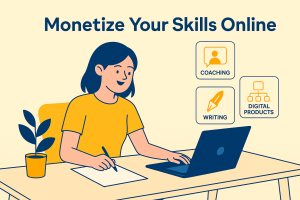
There are three main routes to explore:
Option 1: Offer Freelance Services
This is one of the fastest ways to get started. Whether it’s writing blog posts, designing social media graphics, doing voiceovers, or editing videos — you can offer your expertise as a freelance service. The beauty of freelancing is that you don’t need to create a product or build a business from scratch. You simply help others with tasks they don’t have time or skill to do.
Option 2: Create Digital Products
If you want to generate passive income, digital products are a powerful option. These could include:
- Templates (resumes, social media posts, budgeting spreadsheets)
- Ebooks or guides
- Printable planners or journals
- Toolkits, swipe files, or even digital art
Once created, digital products can be sold over and over again without any extra work. It’s scalable and hands-off, especially if you set up automated delivery through platforms like Gumroad, Etsy, or your own site.
Option 3: Courses and Coaching
If you have deep experience in your field, consider offering 1-on-1 coaching or launching a course. People are willing to pay a premium to learn directly from someone who’s been there and done it. Even a simple 60-minute session or a mini-course on Skillshare or Teachable can start bringing in income and building your reputation.
Remember, you don’t need to launch everything at once. You could start with a single offer — like a $10 Canva template or a 30-minute consulting call — and grow from there. What matters most is getting that first sale and proving there’s demand.
Related: Best Digital Products to Sell Online for Passive Income

3. Choose the Right Platform to Start Selling
You’ve got the skill, and now you’ve packaged it into a service or product — but where do you actually sell it? Choosing the right platform is crucial because it determines how easily people can find and buy from you. Luckily, there are beginner-friendly options for every type of income stream.
For Freelance Services:
If you’re offering your time and talent as a freelancer — whether it’s writing, video editing, virtual assistance, or graphic design — these platforms are great places to start:
- Fiverr – Ideal for quick gigs and side hustles. You can list services starting at $5.
- Upwork – Perfect for building long-term client relationships and higher-paying freelance jobs.
- PeoplePerHour – A good blend of hourly and project-based freelance work.
- Freelancer – Competitive but diverse in the types of freelance jobs available.
These platforms already have a built-in audience, which means you can focus on delivering quality work instead of finding clients from scratch.
For Digital Products:
If you’ve created a product like a template, ebook, or printable planner, here are some great platforms to sell them:
- Gumroad – Super simple setup and perfect for creators.
- Etsy – A top choice for digital and printable items with a handmade or creative touch.
- Podia – Great if you plan to sell digital products and courses later on.
The goal is to get your products out into the world as quickly as possible. You can always expand to multiple platforms once your first offer is validated.
For Courses or Coaching:
If you’re ready to teach or guide others, consider:
- Teachable or Thinkific – Easy to build full-length courses with videos, quizzes, and resources.
- Skillshare – Great for reaching an audience interested in creative and professional development.
- Calendly + Zoom – A lightweight option for offering coaching or consultation calls.
The best part? You don’t need a massive audience. Even a small handful of clients or customers can bring in solid income if your offer solves a real problem.
Related: Top Online Platforms to Start Earning Money as a Beginner
4. Build a Basic Online Presence to Showcase Your Skill
If you want people to pay you for your skills, they need a place to see what you do. This doesn’t mean you need a fancy website or a massive social media following — just a simple, clean online presence that proves you’re legit.
Why This Matters:
Think of it this way — would you hire someone if you couldn’t find any information about them online? Probably not. A basic digital presence builds credibility and trust, even if you’re just getting started.
What You Need:
- Portfolio or Landing Page: Create a one-page site using tools like Carrd, Wix, or WordPress. Include your services, examples of your work, testimonials (if you have them), and a simple contact form or “Hire Me” button.
- LinkedIn Profile: Make sure it’s up to date with your skills, experience, and what services or products you offer. Use it as a networking and credibility tool.
- Work Samples: Share screenshots, links, or mockups of your past work. Even personal projects count!
- Clear Call-to-Action: Whether it’s “Book a Free Discovery Call,” “Download My Free Template,” or “Check Out My Etsy Store,” you want to tell people exactly what to do next.
You don’t need to overthink this — done is better than perfect. Your presence will grow as your work and experience grow.
Related: How to Start Making Money Online: A Beginner’s Roadmap
5. Use AI and Automation Tools to Save Time
One of the biggest advantages of building an online income today? You don’t have to do it all manually. Thanks to AI and automation tools, you can get more done in less time — even if you’re a one-person show.
Why It’s a Game-Changer
Time is your most valuable asset when starting out. Whether you’re managing freelance clients, creating digital products, or growing an audience, there’s only so much you can do in a day. That’s where AI steps in.
With the right tools, you can streamline tasks like writing, design, customer communication, and project management. You’ll work smarter, not harder — and free up time to focus on what matters most: delivering value and growing your income.
Beginner-Friendly AI & Automation Tools
- ChatGPT – Use it to write blog posts, create email templates, generate product descriptions, brainstorm ideas, or even draft freelance pitches.
- Canva – Design stunning social media posts, PDFs, or lead magnets in minutes. The drag-and-drop interface is perfect for non-designers.
- Notion or Trello – Organize tasks, plan content, and manage client work with simple drag-and-drop boards or visual dashboards.
- MailerLite – Collect emails, send automated sequences, and promote your digital products or services — all on autopilot.
These tools are free or offer generous free plans, so there’s no risk in trying them. As your income grows, you can invest in premium versions to unlock more features.
Related: How to Make Money with AI Tools as a Beginner
6. Market Yourself Authentically
So, you’ve got a valuable skill and maybe even a product or service to offer. Now comes a step many beginners overlook — telling people about it. Marketing doesn’t have to feel pushy or salesy. In fact, the most effective kind of marketing today is authentic storytelling.
Be Real, Not Perfect
People want to connect with real humans, not polished brands. Share your journey, your wins (and failures), and how your skills can help others. Whether you’re posting a client transformation or showing behind-the-scenes of how you created your digital product, let your personality shine through.
Where to Start Promoting Yourself
- Social Media: Platforms like Instagram, LinkedIn, Pinterest, and X (Twitter) are perfect for sharing content about what you do. Try short tips, project examples, or client testimonials.
- Community Forums: Help people in places like Reddit, Quora, or relevant Facebook Groups. Answer their questions genuinely — and subtly link back to your service or resource.
- Your Own Website or Blog: It doesn’t have to be fancy. A simple blog post or case study can position you as an expert in your field.
What Kind of Content Works?
- Before-and-after examples
- Step-by-step tutorials
- Common mistakes and how to fix them
- Stories about real client results
- “A day in the life” style posts
The key is giving value first. When people see that you know your stuff and genuinely want to help, they’re more likely to trust and hire you.
Pro Tip: Don’t underestimate the power of word-of-mouth. Ask satisfied clients to refer you or leave a short testimonial. Social proof is often what turns a visitor into a paying client.
Related: How to Start Making Money Online: A Beginner’s Roadmap
7. Expand and Monetize Further
Once you’ve got some traction — a few clients, some sales, or growing traffic — it’s time to think bigger. Don’t just stop at one service or product. You can scale your skill into a full-blown online income stream.
Ways to Grow Your Earnings Without Burning Out
1. Raise Your Prices
As you gain experience and social proof, don’t be afraid to increase your rates. You’re not just selling time — you’re selling value, and clients will pay more for proven results.
2. Build an Email List
Having direct access to your audience through email is one of the most powerful assets in online business. Use free tools like MailerLite or ConvertKit to start building a list and send helpful tips, offers, or updates.
3. Sell Bundles or Packages
Instead of offering one-off services, combine them. For example, if you’re a writer, bundle blog writing + content strategy + SEO optimization into a premium offer. If you sell digital products, create themed bundles at a higher price.
4. Create Passive Income Streams
Turn your knowledge into digital products that sell while you sleep — like templates, mini-courses, or paid toolkits. This way, you stop trading time for money and start earning even when you’re offline.
5. Partner with Others
Affiliate marketing is another excellent add-on. Recommend tools or services you use and earn a commission when others sign up. Just make sure they’re truly useful to your audience.
Explore more: Beginner’s Guide to Affiliate Marketing: How to Get Started for Free
Build a Personal Brand
Over time, people will start recognizing you not just for what you do, but who you are. That’s personal branding — and it’s a long-term growth asset. You can launch your own site, speak on podcasts, create a YouTube channel, or write on platforms like Medium to build authority.
The more trust and visibility you build, the more opportunities come your way — often without even asking.
Monetizing your skills online isn’t reserved for experts or influencers — it’s for anyone willing to take action. Whether you’re starting with zero followers or just testing the waters with a small offer, there’s room for you in the digital economy. Your unique skills, experiences, and perspective have real value. The key is showing up, solving problems, and staying consistent. Don’t wait until everything’s perfect — start where you are, with what you know. The sooner you begin, the faster you’ll learn, grow, and start earning.


